The basic principle: forage first
Horses are trickle feeders by nature, built to graze little and often throughout the day. Their digestive system evolved around a long, steady flow of fibre. That is why the foundation of every feed plan is forage: hay, haylage, grass and straw. Hard feed (cereals, cubes, mixes and the like) is there to top up the energy and nutrients that forage alone cannot provide.
A commonly cited guideline is that a horse should receive at least 1.5% of its body weight per day in forage dry matter. Treat that as a starting point: the right amount depends on the horse's weight, workload, age, condition and the quality of the forage, and should be set with your vet or an equine nutritionist.
Forage: quality, quantity and continuity
Three questions matter with forage: is it clean, is there enough of it and does it last through the day? Dusty or mouldy hay, or hay with foreign material in it, invites respiratory and digestive trouble. Opening and smelling bales from each new delivery and setting aside anything doubtful is a simple but effective habit.
Horses should not go long periods without forage. A horse that finishes its hay early in the night stands with an empty stomach for hours until breakfast. Small-holed haynets and slow feeders can help spread forage over a longer period. If you can, have your hay analysed; it means supplement decisions are based on data rather than guesswork.
| Forage | Hard feed | |
|---|---|---|
| Examples | Hay, haylage, grass, straw | Cereals, cubes, mixes, oil-based feeds |
| Main role | Fibre, gut health, long-lasting fullness | Extra energy and nutrient support |
| How it is fed | Spread through the day, aiming for near-constant access | Small, frequent meals |
| Watch out for | Dust, mould and variable quality | Large meals and sudden increases |
Hard feed: when and how much
Many horses in light work and good condition can meet their needs with good forage and a suitable vitamin and mineral balancer. Horses in hard work or competing, pregnant or lactating mares, and horses that need to gain weight usually need extra energy. The aim is to add hard feed on top of forage, not to replace it.
Rather than one large feed, splitting the daily total into several smaller meals is common and sensible practice. Weighing every feed (on scales, not by the scoop) makes a real difference to consistency between horses. Remember that different feeds can weigh very differently for the same volume.
Change feeds slowly
Introducing a new feed, a new batch of hay or a move to grass gradually is one of the most basic rules for protecting the gut. Spreading the change over anything from several days to a few weeks is the usual advice; agree the timeline with your vet or nutritionist.
Choosing supplements: start from the need
Supplement shelves fill up easily. On yards where every horse gets three or four products, it is common for the same vitamin or mineral to come from several sources, in other words to be overfed. A good supplement decision follows this order:
- Write down the current diet: forage, hard feed and every product already being fed
- Where possible, use a forage analysis to see what may be lacking
- Define a real need with your vet or nutritionist (for example joints, hooves, digestion, electrolytes)
- Make one change at a time and monitor the result for a while
- Drop products that are not helping, and review the list regularly
For competition horses, what is in a supplement matters too; some ingredients can conflict with competition rules. We cover this in more detail in our article on competition medication records. If you are unsure about a product, ask your vet.
Common feeding mistakes on the yard
Most yards go through these at some point. None of them comes from bad intentions; they usually grow out of habit, time pressure or a gap in knowledge.
- Keeping the hard feed at training-day levels on rest days
- Cutting forage for a horse that needs to lose weight while leaving the hard feed unchanged
- Moving a new arrival onto the yard's standard feed from day one
- Adding a supplement because “it can't hurt” and never reviewing it
- Clearing uneaten feed from the manger without telling anyone
The shared fix is to keep the plan in writing, record every change and pass on what you observe. When the workload changes, the feed plan needs reviewing too; we look at that link in our article on weekly training load.
Feeding the plan the same way on every shift
However good the feed plan, if the morning groom does it one way and the evening groom another, there is no plan. The whiteboard in the feed room, the sheet on the stable door and WhatsApp messages drift apart easily. These habits help keep things consistent:
Feeding routine checklist
- Each horse's current feed plan is written down in one place everyone can access
- Hard feed and supplements are weighed, never judged by eye
- Meals are given at roughly the same times every day
- Leftover feed and changes in appetite are recorded
- Water buckets and drinkers are checked at every feed
- Each new hay delivery is checked for smell, dust and mould, and logged
- Changes to the plan are made in writing and passed to every shift
- Allergies or special diet notes show at the top of the horse's card
Regularly assessing body condition and measuring weight at set intervals (with a weigh tape if there is no weighbridge) is the most concrete way to see whether the plan is working. To keep information from getting lost between shifts, see also our article on groom shift handover.
Feed plans in Equ Crm
In Equ Crm, every horse profile keeps a nutrition plan and supplements section, while allergies and “need to know” notes appear at the top of the card. The ready catalogue includes 367 feeds and supplements, so you can build the plan by picking from a list rather than typing it from scratch. Body measurements live in the same profile, so you can follow changes in condition over time.
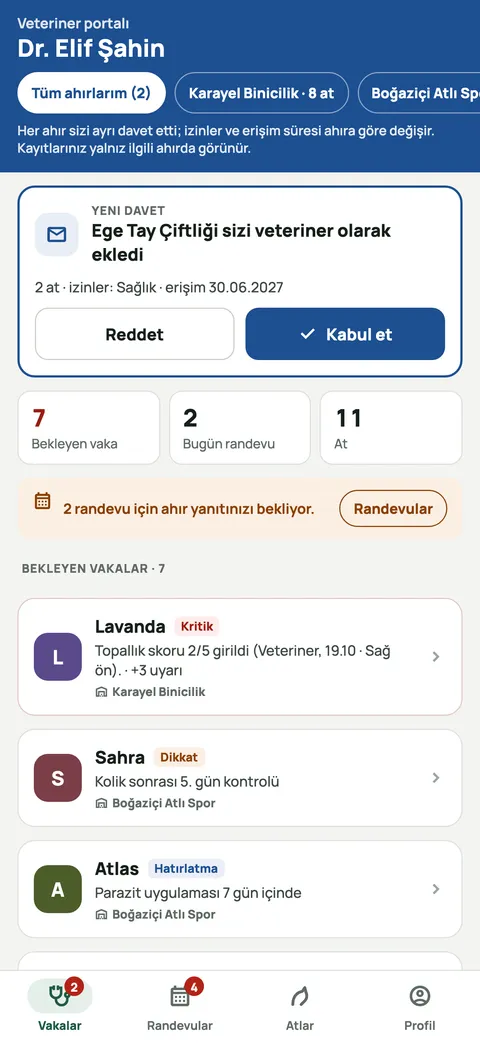
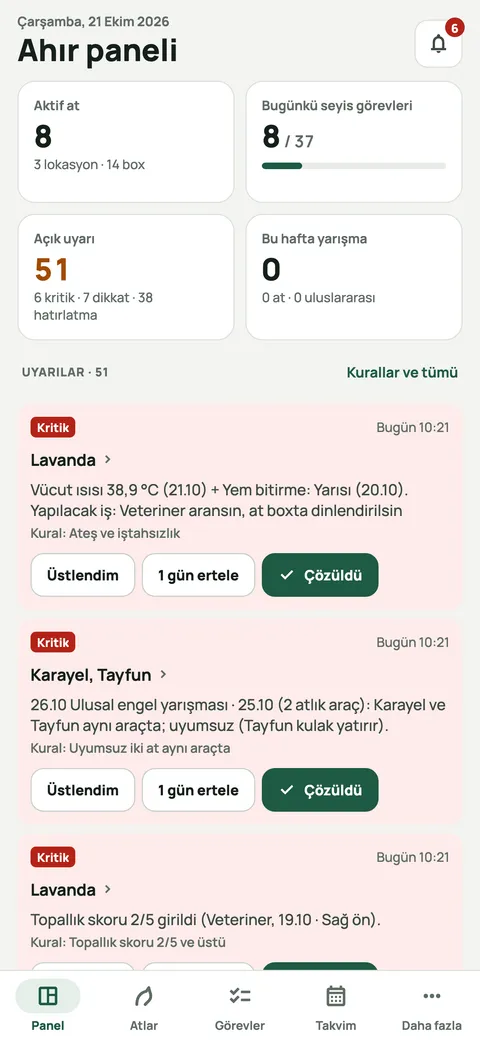
Feeds flow from the daily care routines into grooms' task lists per horse and time. The groom marks each feed with one tap, adding a note or photo if needed, and the manager approves. For situations such as fever together with loss of appetite, alert rules bring a risky picture to the right person straight away. Owners can approve supplement costs above a threshold you set through the owner portal. To see how it would work on your yard, you can book a demo.