Why hoof care is the whole yard's job
Everyone in the horse world knows the old saying: no foot, no horse. The hoof carries the horse's entire weight, absorbs shock with every stride and helps circulation. That is why its care cannot be left to a farrier visit every few weeks. The farrier does the work, but it is the grooms, the trainer and the yard manager who see how the foot lives between visits.
On a well-run yard, hoof care rests on three things: a regular farrier interval, daily checks and complete records. When one of the three slips, the problem usually comes back as lameness, a lost shoe or a cancelled training session.
Farrier intervals: no magic number, but a routine
Hooves grow continuously, and the rate varies with the horse, the season, diet, ground conditions and workload. A commonly cited general range is that most shod horses need the farrier every 4–8 weeks, many of them around every 5–6 weeks. Barefoot horses need regular trimming too; their intervals can sometimes be a little more flexible, but leaving the foot to look after itself is not an option.
The right interval for each horse is set by your farrier and your vet. Your job is to make sure that interval actually holds in the diary. Treat the table below as a starting point, not a rule.
| Horse | Typical interval | Things to watch |
|---|---|---|
| Shod horse in regular work | Around 5–6 weeks | Bring the visit forward ahead of a competition or busy season |
| Barefoot horse in light work | Around 6–8 weeks | Watch wear against the ground; note cracks and chips |
| Young horse | More frequent checks | Conformation and development are followed with the farrier and vet |
| Remedial shoeing or horse under treatment | Plan set by the vet | Vet–farrier cooperation is essential; never stretch the interval on your own |
The groom's daily hoof check
The point of a daily check is not to diagnose anything but to notice change early. Every horse's feet should be picked out and looked at at least once a day, ideally before and after work. Done in the same order every day, it takes a few minutes.
Daily hoof checklist
- Pick out all four feet; look for stones, nails or anything lodged in the sole
- Check the frog and the grooves around it for a bad smell, black discharge or softening
- Check each shoe is in place and tight, has not shifted, and no clenches have risen
- Look for new cracks, chips or separation in the hoof wall
- Feel each foot with the back of your hand; is one noticeably warmer than the others
- If you can feel a digital pulse at the back of the fetlock and it is stronger than usual, note it
- Walk the horse a few steps; watch for an uneven stride, a short step or shifting weight
- Record anything you notice the same day and tell the person responsible
Wet paddocks and long hours in mud, or the opposite, very dry and hard ground, all affect hoof quality. Checking a little more carefully as the seasons change helps reduce frog problems and lost shoes.
When to raise the alarm straight away
Some findings cannot wait for the next farrier visit. In the situations below, tell the yard manager immediately, and the manager should call the vet or farrier as appropriate.
- Sudden lameness, or the horse not wanting to bear weight on a leg
- Heat and a strong pulse in more than one foot, especially with the horse rocking its weight back
- A nail or sharp object in the sole (call the vet before removing it)
- A crack in the hoof wall that bleeds or runs deep
- A lost or half-pulled shoe together with soreness
Our article on lameness and colic covers in more detail what to look for in the first hours on the yard.
Preparing for the farrier visit
A farrier's time is valuable, and a well-prepared visit improves both the quality of the work and your relationship. Horses should be ready, the area safe and the information to hand.
- The day before, confirm which horses are to be seen and any special notes
- Have horses clean, with feet dry and picked out, on a flat, well-lit standing area
- Keep a groom who knows the horse at its head for the whole visit; plan ahead for difficult horses
- Tell the farrier about any lost shoes, lameness, cracks or changes in workload since the last visit
- Mention any upcoming competition, transport or change of surface
- When the visit is done, record the work, the farrier's recommendations and the next date
The flow of information between farrier and vet matters most for horses under treatment. If there are X-rays, a vet's note or a remedial shoeing decision, keeping that information somewhere the farrier can see it too saves repeated phone calls and misunderstandings.
What to record
Hoof history is one of the most neglected parts of a horse's health file. Yet regular records let you spot recurring problems, set intervals correctly and keep the owner properly informed.
| Field | Example content |
|---|---|
| Date and farrier | Day of the visit and who did the work |
| Work done | Trim, new set, reset, check only |
| Notes per foot | What was done on which foot, any cracks or wear seen |
| Shoe and material type | Type of shoe used and any special application |
| Recommendations | What the farrier or vet advises until the next visit |
| Next appointment | Planned date |
| Photos | Before and after shots of the foot where useful |
Tracking hoof care with Equ Crm
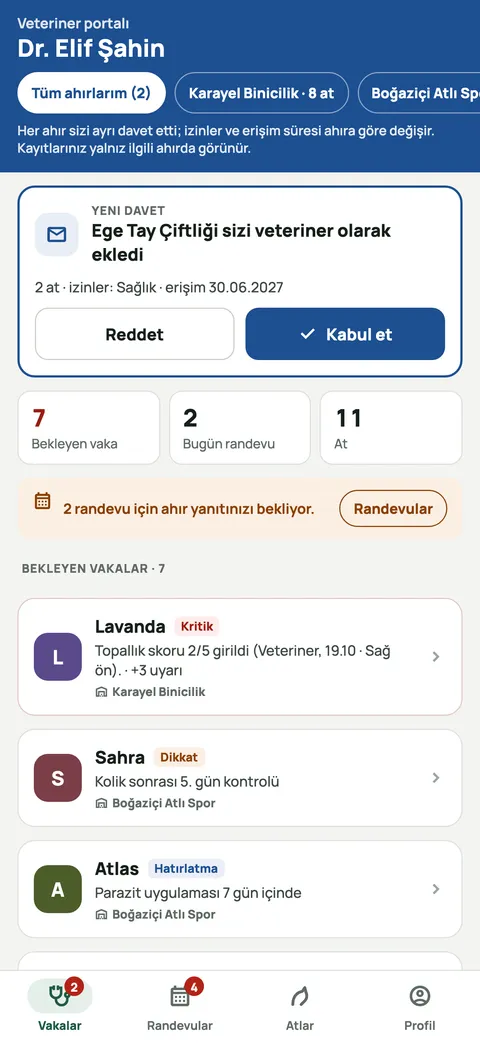
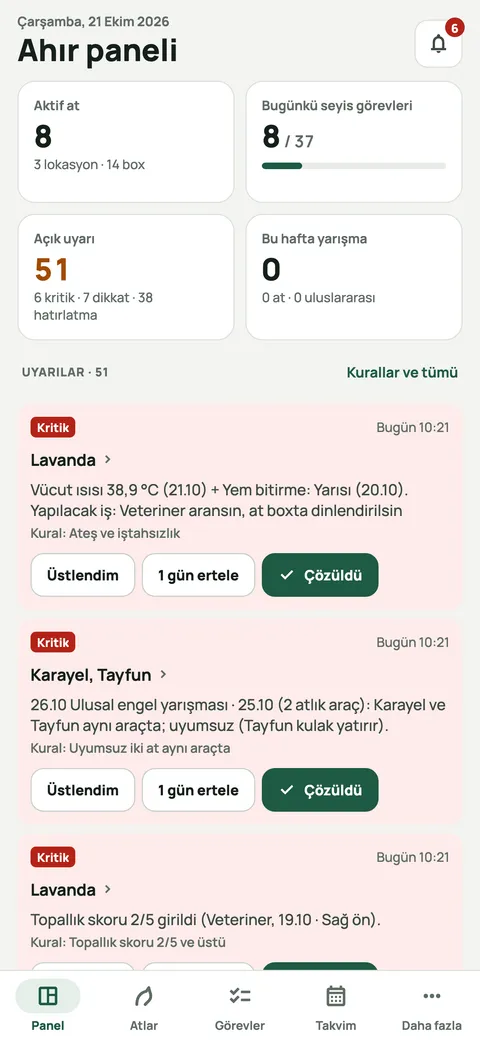
In Equ Crm, every horse profile keeps hoof and shoeing history as its own section, alongside health records, vaccinations and the “need to know” notes. Farrier appointments appear in the weekly calendar together with vet, physio and competition appointments, and their status (planned, arrived, completed) is tracked.
Daily picking out and hoof checks can be added to grooms' task lists per horse and time. The groom marks the task with one tap and adds a photo if needed; the manager approves it or sends it back with a note. Even on a yard with no signal, marks are saved and sync when the connection returns. By setting up alert rules for things like a lameness score or missing entries, you can make sure a risky situation reaches the right person. If your farrier works across several yards, they use one account and see each yard's data only as far as their role allows.
If you would like to see how this looks for your own yard, you can book a demo. For the full daily routine, see our groom routine guide.