Why the routine should be written down
On most yards the routine lives in the head groom's head. On their day off, feed times drift, someone forgets a horse's stable bandages, and the horse that left its breakfast goes unnoticed until evening. Horses are creatures of habit; irregular feeding, turnout and exercise show up in both behaviour and digestion. A written routine makes the work independent of any one person: a new starter and the weekend cover do the same checks, in the same order.
The second benefit is early warning. An eye that looks at the same things every morning quickly spots small changes — feed left over, a bucket barely touched, unusual droppings, heat in a foot. The routine turns observation into habit.
The morning check: the first hour of the day
The morning round is your best chance to read what happened overnight. Looking into each stable for a few seconds before feeding saves hours later. A sensible order is:
Morning check
- See every horse standing and in a normal posture; if one is lying down, watch how it gets up.
- Note how much of the night feed and hay or haylage has been eaten.
- Check buckets or automatic drinkers are working and how much has been drunk.
- Look for any obvious change in the amount or consistency of droppings.
- Check the bed for signs of a restless night: churned bedding, box walking, sweat marks.
- Straighten rugs; replace any that have slipped, torn or are wrong for the weather.
- Run a hand down every leg for swelling, heat or new cuts.
- Feed breakfast according to each horse's feed plan, without missing individual supplements.
During the day: grooming, turnout, walker and exercise prep
After breakfast, the exercise schedule sets the rhythm of the day. The groom's job is to have each horse ready on time, then to cool it off properly and put it away after work. Daytime jobs usually fall into these blocks:
- Mucking out: removing droppings and wet bedding, sweeping the aisle. It is safer and quicker done while the horse is in the field or on the walker.
- Grooming: body brush, curry comb, mane and tail, picking out feet. Grooming is also a check of skin, muscle and legs — stiffness, sensitivity and wounds show up here.
- Turnout and walker: which horse goes to which paddock, with whom and for how long should be decided in advance. Horses that do not get on must never share a field.
- Exercise prep: the right tack, boots or bandages, and the horse ready when the rider wants it. Afterwards: walking off, washing down, checking legs.
- Lunchtime feed and extra forage: for horses on a midday feed, keep the time consistent.
The most common daytime problem is broken communication: the trainer cancels a horse's session but the groom never hears, so the horse is tacked up for nothing or stays in when it should have gone out. Schedule changes need to be visible in one place.
Evening close-down and the late check
The evening close-down is what makes the night safe. It is where you confirm that the day's work has really been finished.
Evening close-down
- Evening feed and night forage given according to plan.
- All buckets full, automatic drinkers working.
- Rugs changed to suit the overnight forecast.
- Anything noted during the day (swelling, a cut, feed left) passed on to the person in charge.
- Stable doors, field gates and the feed room locked.
- Electrical equipment off, aisle clear, fire extinguishers accessible.
- Who does the late check, and when, is agreed.
If the evening and morning teams are different people, plan the handover separately. We cover this in detail in groom shift handover.
Not forgetting the weekly and monthly jobs
Some jobs sit outside the daily routine but cause trouble when they slip. Tie them to a calendar too, or they get pushed back "to this week" for weeks on end.
| Frequency | Task | Responsible |
|---|---|---|
| Weekly | Full bed change or deep clean | Groom team |
| Weekly | Clean and check tack and rugs for repairs | Groom |
| Weekly | Stock count of hard feed and forage | Head groom |
| Weekly | Check field fencing, gates and water troughs | Yard manager |
| At planned intervals | Farrier visit | Yard manager and farrier |
| Monthly | Weight or body measurement tracking | Head groom |
| Monthly | First aid kit and expiry dates | Yard manager |
Farrier intervals vary with the horse, its work and its feet; see our article on shoeing and hoof care for more.
Task tracking: who did what, when, and how do you know?
Writing the routine is half the job; the other half is knowing it was done. A list pinned to the wall works for the first couple of weeks, then nobody ticks it. A good tracking system should always answer four questions:
- What needs doing? Clear, specific tasks per horse (not "bandage", but "cold hose right fore, 20 minutes").
- When? A time or time slot, especially for time-sensitive jobs such as medication and feeds.
- Who did it? The name of the person who ticked it and the time.
- How was it done? Where needed, a photo, video or measurement (temperature, weight, a picture of a wound) and a short note.
At the end of the day the head groom or yard manager should see what was missed or only partly done, and send it back if necessary. The point is not to find someone to blame; it is to make sure each horse actually got the care it needed.
Running the groom routine in Equ Crm
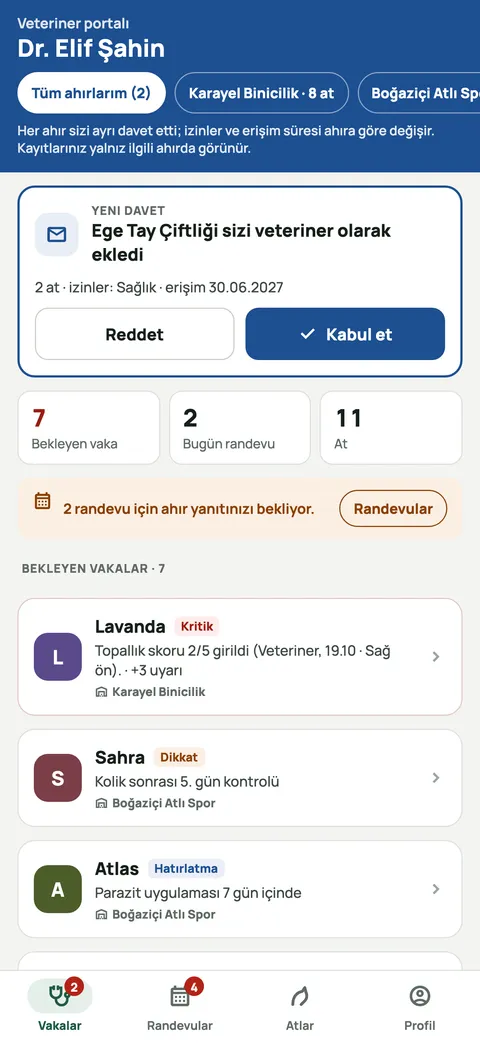
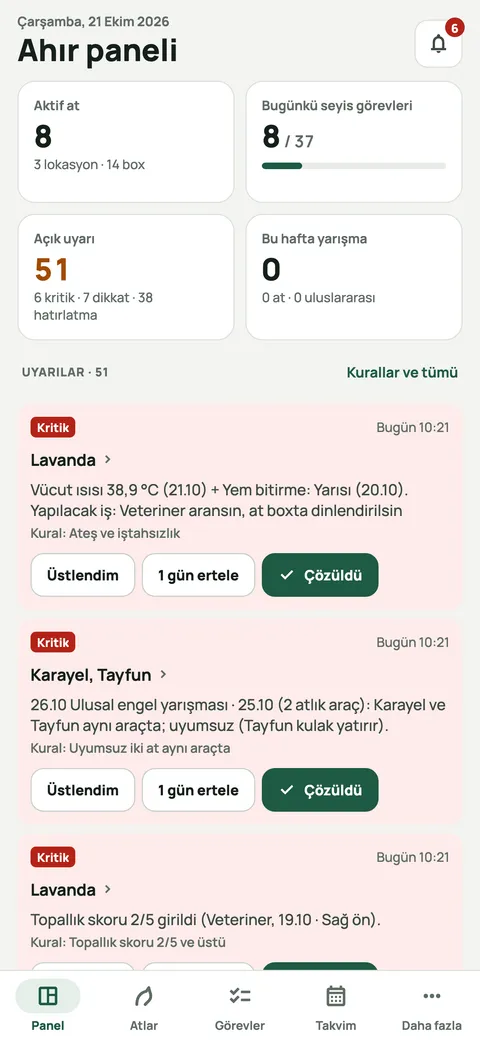
In Equ Crm, once a horse's daily care routine is set up, the grooms' task list is generated per horse and per time slot. Grooms tick jobs off on their phone with one tap and can add a photo, video or measurement as proof. The head groom or manager approves the work or sends it back with a short note. Weak signal in the barn is not a problem: ticks are saved offline and sync when the connection returns.
You do not have to write the lists from scratch either; the built-in catalogue has 455 groom tasks you can pick from and adapt. Each horse's profile keeps allergies and "need to know" notes at the top, alongside the feed plan and supplements. You can set up alert rules so that the right person hears quickly when a horse leaves its feed or runs a temperature. Have a look at the groom module, or book a demo and we will set up your routine with you.