Why you need a yearly plan
On many yards, vaccination dates live in the passports, worming goes into a notebook and the vet's advice sits in somebody's phone. With a handful of horses and a stable team, that just about works. Once numbers grow, liveries come and go or the competition season starts, the question “When was this horse's flu jab?” suddenly has no quick answer.
A yearly plan pulls all of that into one framework. At the start of the year you know which horse is due which vaccine and when, when faecal samples will be taken and who is responsible. Vet visits can be batched, owners get notice in advance, and the last-minute scramble before a show disappears.
Which vaccines to discuss
No two vaccination programmes are identical, but the same topics tend to come up at the planning meeting. Your vet will weigh them against local disease risk, whether horses travel and compete, and how often new horses arrive on the yard.
- Tetanus: Horses are highly susceptible to tetanus and even a small wound can be a route in, so it features as a core vaccine in almost every programme.
- Equine influenza: A fast-spreading respiratory disease. It matters most for horses that compete and travel, and the FEI and many national federations require documented vaccination.
- Equine herpesvirus (EHV): Can cause respiratory disease, in some forms neurological problems, and abortion in pregnant mares. Whether and when to vaccinate is a conversation to have with your vet based on how your yard is run.
- Region-specific vaccines: Rabies or other diseases seen in particular areas may be added depending on local risk and regulations.
The intervals for the primary course and later boosters differ between vaccines and manufacturers. Take them from your vet and the product information rather than from an article, and enter exactly those dates into your plan.
Competition rules and passport records
For competition horses, vaccination is an eligibility matter as well as a health one. At FEI events, equine influenza vaccination must be correctly recorded in the passport by a vet. The rules on the primary course, booster intervals and how recently a horse may have been vaccinated before competing are tied to specific time windows, and they are revised from time to time.
Rather than memorising intervals, check the current FEI Veterinary Regulations and your national federation's rules at the start of every season. For racehorses, the rules of the relevant racing authority apply. One missing signature or wrong date in a passport can stop a horse from starting at a show you have spent months preparing for.
A targeted approach to worming
For many years the standard approach was to worm every horse at fixed intervals, rotating active ingredients. Many vets are now moving away from that “every horse, every time” habit. The main reason is that frequent, unnecessary use speeds up drug resistance in parasites, and some wormer groups are already losing effectiveness.
In a targeted approach, decisions are based on testing. At times agreed with your vet, droppings samples are taken and a faecal egg count (FEC) is run. The result shows which horses need treatment and which can simply be monitored. Some parasites, such as tapeworm and certain larval stages, do not show up reliably in an egg count, so your vet may recommend a separate test or a seasonal treatment for those.
Repeating the count a while after treatment (a faecal egg count reduction test) tells you whether the wormer still works on your yard. That is valuable information when you plan the following year.
Pasture and paddock management
Wormers are only part of parasite control. Picking up droppings from paddocks regularly, avoiding overgrazing, resting and rotating paddocks where possible and not crowding too many horses onto small areas all reduce the need for treatment. Unless these jobs are written into the grooms' daily routine, they quietly get skipped.
New arrivals and quarantine
A new horse can bring both infectious disease and resistant worms onto the yard. A written arrival procedure is therefore as important a part of the yearly plan as the vaccinations themselves.
New arrival checklist
- Passport and vaccination records requested before arrival; any gaps discussed with the vet
- Last worming and any recent egg count results obtained from the previous yard
- Stabled and turned out separately for the period your vet recommends
- Separate buckets, feed bowls and grooming kit used during quarantine
- Temperature taken and recorded every day
- Droppings sample taken as advised by the vet and the result recorded
- Decision to end quarantine made with the vet and noted
An example yearly calendar
The table below only illustrates what a plan might look like. Months and tasks differ for every yard, so fill in your own calendar together with your vet.
| Period | Vaccination | Parasite control | Yard tasks |
|---|---|---|---|
| January–February | Review the yearly plan with the vet | Review last year's egg count results | Check passports and records |
| March–April | Pre-season boosters as planned | Spring faecal egg counts | Plan paddock rest and rotation |
| May–June | Check flu status against the show calendar | Targeted treatment and reduction test if needed | Regular poo-picking |
| July–August | Check records of new arrivals | Summer faecal egg counts | Prepare isolation stables |
| September–October | Boosters as planned | Seasonal check as advised by the vet | Paddock maintenance |
| November–December | Draw up next year's vaccination list | End-of-year review | Archive the year's records |
Give every row a named owner. A team that knows the plan but not who is doing what is not much better off than a team with no plan at all.
Tracking the plan with Equ Crm
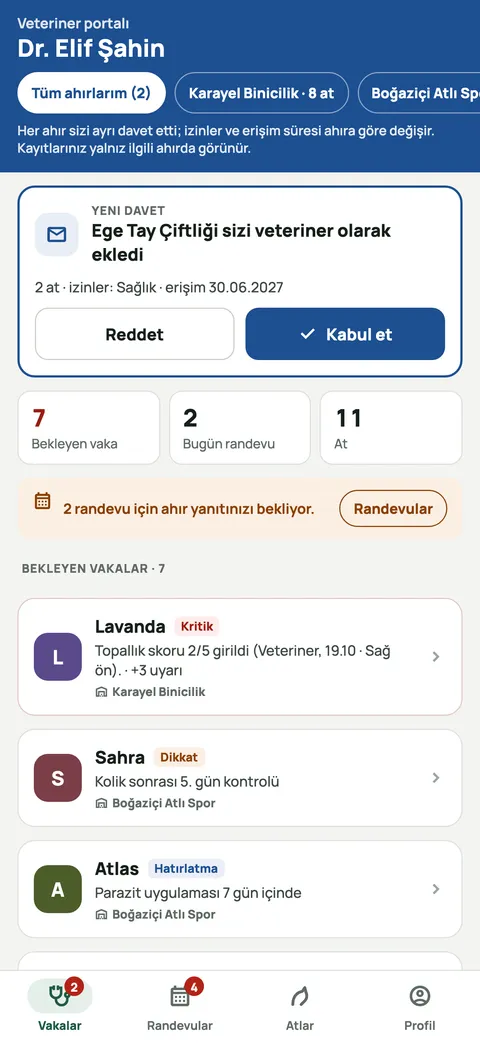
In Equ Crm, each horse's profile keeps vaccinations and health records in their own section, so you can see at a glance which vaccine was given when and who recorded it. Vet visits and planned vaccination appointments sit in the calendar alongside everything else in a weekly view, with each appointment's status tracked as planned, arrived or completed.
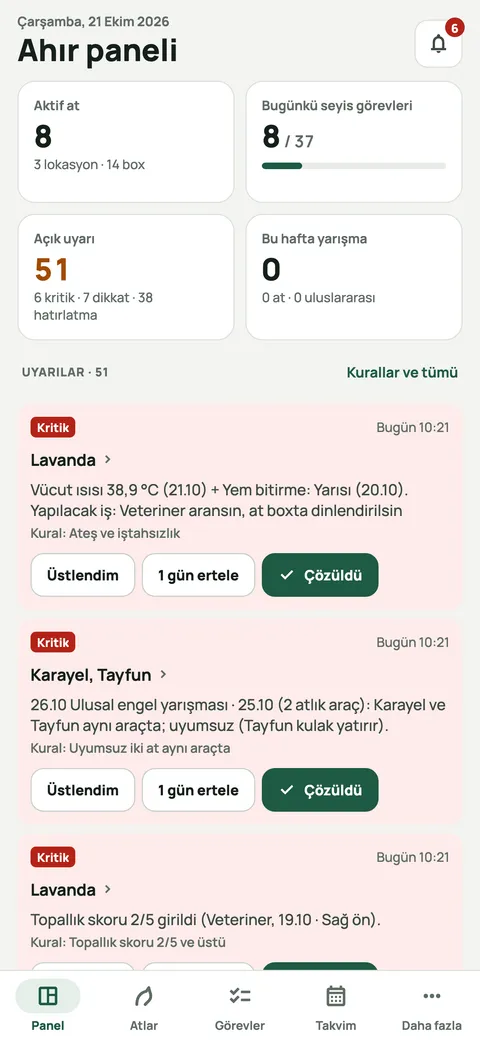
Alert rules can catch missing data entries and risky situations; for example, fever together with loss of appetite in a horse in quarantine notifies the right person. Jobs such as the daily temperature check or poo-picking go onto the groom task list, where grooms mark them done with one tap and add a measurement or photo when needed. Owners can approve costs above the threshold you set through the owner portal.
For day-to-day health monitoring, see our article on lameness and colic early signs. If you would like to set up your own yard's plan together, book a demo.