Why trust breaks down
Most friction between a livery yard and its owners comes from communication, not from the care the horses receive. An unexpected vet line at the end of the month, a feed change nobody mentioned, nobody being able to say for certain whether the farrier came... Each one looks minor on its own. Stack a few together and the owner starts to feel they no longer know what their horse is going through.
Owners are usually not on the yard. They come once or twice a week, perhaps less. On the days in between, everything they know is what you tell them. That makes transparency part of the service itself, not a courtesy. On a well-run livery yard the owner finds the information before they have to ask, and opening the invoice holds no surprises.
Define the service scope in writing
The first source of disputes is uncertainty about what the livery fee actually covers. If you offer full livery, part livery or DIY, write out what each package includes, line by line. Are grooming, turnout, rug changes, the walker, bandaging or holding the horse for the vet included? Are forage and standard hard feed included while supplements are charged separately?
| Service | Full livery | Part livery | Charged separately |
|---|---|---|---|
| Stable, bedding and mucking out | Included | Included | — |
| Forage and standard hard feed | Included | Included | Special feeds and supplements |
| Daily grooming and turnout | Included | Set days of the week | Extra days |
| Rugs, bandaging, walker | Included | Done by owner | On request |
| Vet and farrier visits | Booking and holding included | Booking included | Vet and farrier fees |
| Schooling or exercise | Depends on package | — | Per session |
Attach this table to the livery agreement and walk through it with every new owner. Announce price changes the same way, in writing and with reasonable notice. A written scope tells owners exactly what they are paying for, and gives you something to point to when the question “wasn't that included?” comes up.
The first week with a new horse sets the tone of the whole relationship. On arrival day, collect the horse's vaccination and worming history, the date of the last farrier visit, any allergies, feeding habits and known quirks, and note the contact details of the owner's own vet and farrier if they have them. Short notes to the owner over the first few days about appetite, droppings and behaviour are the quickest way to show their horse is in good hands.
Set approval rules for extra costs
The most sensitive moment in livery is a cost appearing on the invoice that the owner never heard about. The simplest prevention is an approval threshold: routine items below a set amount (a bandage that ran out, a standard supplement) you simply do and add to the invoice; anything above it needs the owner's approval first.
- Write the threshold into the agreement. Agree the amount with each owner; some want to hear about every item, others give you more room.
- Make approval requests specific. What will be done, why, by whom, roughly what it will cost, and by when you need an answer.
- Get approval in writing. A verbal “fine” on the phone is easily forgotten; an approval given by message or through a system settles the question at month end.
- Define emergencies separately. For situations that cannot wait, such as suspected colic, agree in advance that you will call the vet straight away and inform the owner at the same time.
Regular updates: what, how often and from whom
Owners don't need to know everything instantly, but they don't want to miss what matters either. Rather than leaving communication to whoever happens to be around, set a rhythm. Decide who speaks to owners, too: one named person getting back to every owner is far better than five grooms telling them five different things.
| Situation | When | How |
|---|---|---|
| Change in health (off feed, lameness, temperature) | The day it is noticed | Direct message, phone call if needed |
| Vet, farrier or physio visit | After the visit | Short summary plus any notes |
| Feed or routine change | Before the change | With the reason for it |
| General condition, photos and video | Weekly or fortnightly | One short round-up |
| Invoice | Same day every month | Itemised breakdown |
Photos and short videos build more trust than long explanations. Ten seconds of a relaxed horse in the field says more than “all fine”. Make it part of the grooms' normal routine; if it feels like an extra job, it gets forgotten.
Invoices that don't get disputed
A good invoice matches exactly what the owner heard over the month. If there is a line they are seeing for the first time, the problem is not the invoice but the communication. Everything approved and reported during the month should appear on the invoice under the same name and date.
Checklist before sending an invoice
- Does the livery fee match the package in the agreement and the current price?
- Is there a written approval for every extra item above the threshold?
- Do vet and farrier lines match the dates of the visits?
- Are special feeds and supplements consistent with the nutrition plan on the horse's profile?
- Are items written in language the owner understands (no internal abbreviations)?
- Are items carried over or corrected from the previous month explained?
- Does the invoice go out on the same day and in the same format each month?
When an owner queries a line, don't get defensive; show the approval record, the visit note or the photo. If there is no record and the item is genuinely disputed, keeping the relationship is often worth more than the item itself. Fix the process for next month.
What happens on the yard shows outside it
Your communication with owners is only as good as your records on the yard. If grooms don't tick off what they did, the vet's notes stay on a scrap of paper and nobody remembers when the farrier is due, you cannot give owners accurate information. Our articles on the daily groom routine and shift handover cover this side in more detail.
- Keep allergies and “need to know” notes at the top of every horse's profile, so even a new groom sees them first.
- Keep vet, farrier and physio appointments in one calendar, with their status (planned, arrived, completed).
- Record feed and supplement changes with a date; the supplement line on the invoice should rest on that record.
- Keep conversations with owners in one place tied to the horse, not on staff's personal phones.
Livery communication with Equ Crm
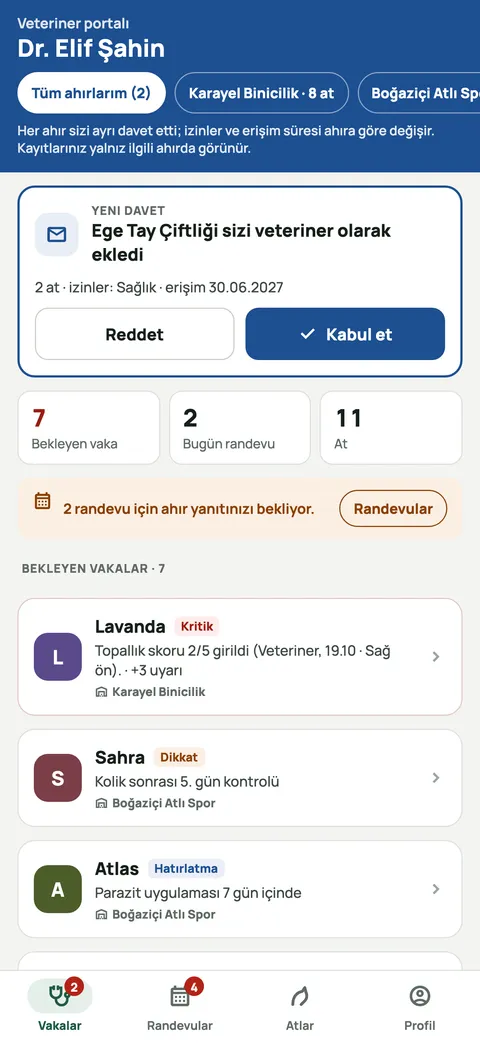
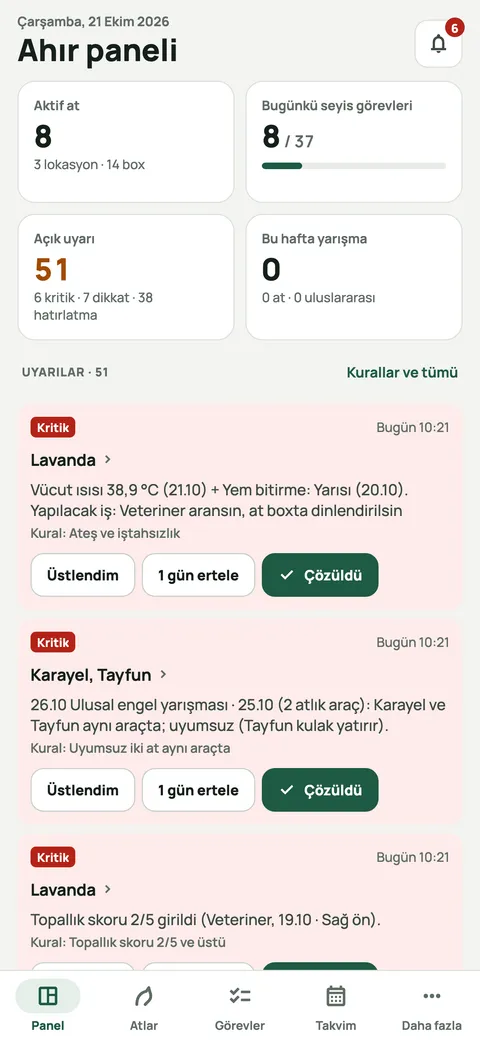
Equ Crm is built to make the routine above part of everyday work. In the horse owner portal owners approve or decline costs above the threshold you set; messaging stays tied to the horse, invoices are visible to the owner and competition results build up in the horse's trophy cabinet. Approvals, conversations and invoices sit side by side in one place.
On the yard side, groom task lists are generated from daily care routines; grooms mark jobs done with one tap, add a photo or video where needed, and the manager approves or sends the task back with a note. Vet, farrier and physio appointments live in a shared calendar. You decide by role which staff see which information. We can plan how to bring over your existing horse and owner lists together in a demo call.
Summary
Trust on a livery yard is built through small, repeated habits rather than grand gestures: a written service scope, a clear approval threshold, a predictable update rhythm and an invoice that matches what was said during the month. Once these are in place, conversations with owners move away from arguing over costs and back to how the horse is progressing. That is the enjoyable part of the job anyway.