Plan backwards from the target competition
A season plan doesn't start by listing every show in the calendar. First choose one or two main targets for each horse: a championship, a qualifier, or the event where the horse steps up a level. Then work backwards from that date. Agree with the trainer, the rider and, where needed, your vet how many competitions the horse should do before the target, at what level and how far apart.
Interim shows have different jobs. Some get the horse used to a new venue, crowds or a long journey; some help the rider find the rhythm of a course; others simply measure form. Write the purpose of each competition into the plan. When a result comes in lower than hoped, you'll remember why you went in the first place.
Break the season into phases
Treating the whole season as one block wears out both the horse and the team. Splitting it into phases makes it easier to balance work and rest. The framework below is an example; adapt it to your discipline and to the horse's age and experience.
| Phase | Aim | Competition load | Watch points |
|---|---|---|---|
| Preparation | Base fitness, technical work | None, or schooling shows | Book farrier, vaccinations and dental checks in this period |
| Season opener | Settling in, finding rhythm | Light, easier levels | Watch appetite and behaviour after travel |
| Main block | Building towards targets | Planned and spaced out | Recovery days between competitions |
| Main target | Peak form | A few selected shows | Don't change the routine; no surprises |
| End of season | Physical and mental rest | None | Season review and general health check |
Recovery and training load between competitions is a topic of its own; see our article on weekly training load planning for the detail. What matters here is that when you put shows in the calendar, you fill the weeks in between deliberately too.
Check paperwork and rules early
The most frustrating problems of a season tend to surface at the secretary's tent rather than on course: an expired registration, a vaccination missing from the passport, a missed entry deadline. National competitions follow your national federation's rules (in Turkey, the Turkish Equestrian Federation, TBF); international ones follow FEI rules. Rules can change from year to year, so check the current texts at the start of the season on the FEI website and with your federation.
- Passport and identification: Is every horse's passport up to date, travelling with the horse and easy to find?
- Vaccination records: The FEI and many federations require influenza vaccination to be documented in the passport; check the timing rules in the current regulations. Our vaccination and deworming schedule article can help with planning.
- Medication records: Every treatment given in the run-up to a competition must be fully recorded. We cover this in our article on medication withdrawal records.
- Entry deadlines: Mark the entry dates for your main targets in the season calendar as clearly as the competition dates themselves.
Transport: the journey is part of the work
Getting to the venue can be one of the most tiring jobs of a horse's season. On long journeys a horse works constantly to keep its balance, and it may drink less. So don't leave transport to the last day. Decide in advance who travels in which lorry and with which horses. Keeping horses that don't get on out of the same lorry may seem minor, but it directly affects the safety of the trip.
Checklist before travelling to a competition
- Passport, entry documents and vaccination records are packed.
- The horses sharing the lorry get on with each other.
- Journey time, rest stops and arrival time are set.
- Enough of the horse's usual forage and hard feed is loaded.
- Water and buckets, plus water from home if the horse is fussy about drinking elsewhere.
- Travel boots or bandages, rugs and the first aid kit are checked.
- Temperature, appetite and droppings are normal before departure, and recorded.
- Contact details for the vet and farrier at the venue are noted.
- It is clear who is responsible for the horses staying at home.
On arrival, rather than working the horse straight away, walk it out, offer water and forage, and keep an eye on its temperature and appetite through the day. Recording where each horse is and when it is due back helps avoid confusion, especially in weeks when several horses are at different shows.
Record results consistently all season
At the end of the season, answering “how did this horse do this year?” from memory is hard. Recording results the same day, after every competition, should become a habit. And it isn't just the placing that matters, but the context that explains it.
| Information | Why it matters |
|---|---|
| Date, competition, level and rider | Shows the conditions the horse competed in |
| Placing, penalties, time | Lets you compare progress through the season |
| Prize money | For owner updates and balancing costs |
| Going and weather | Shows where the horse thrives or struggles |
| Condition after the competition (appetite, heat, lameness) | Sets recovery needs and the next steps |
| Short notes from rider and trainer | Carries technical issues back into training |
These records help you adjust the plan mid-season. If a horse consistently struggles on a certain going, for example, you can factor that in when choosing the next main target. And when you report results to the owner, sharing how the horse is overall, not just the placing, strengthens the relationship.
Team and responsibilities in show weeks
During the season, half the yard may be on the road while the other half stays home. The most common problem in those weeks is “who was meant to do that?” Write down in advance who in the travelling team is responsible for the horse's care, for the paperwork and for the rider's warm-up plan. Do the same for the team at home: who looks after the remaining horses' exercise, feeding and any vet visit?
A short meeting at the start of the season to share the main targets, competition dates and who will be away in which weeks also makes leave and rota planning easier. When the plan changes, as it will, the current version should live in one place everyone checks; different lists on different people's phones cause the most confusion in exactly these weeks.
Season planning with Equ Crm
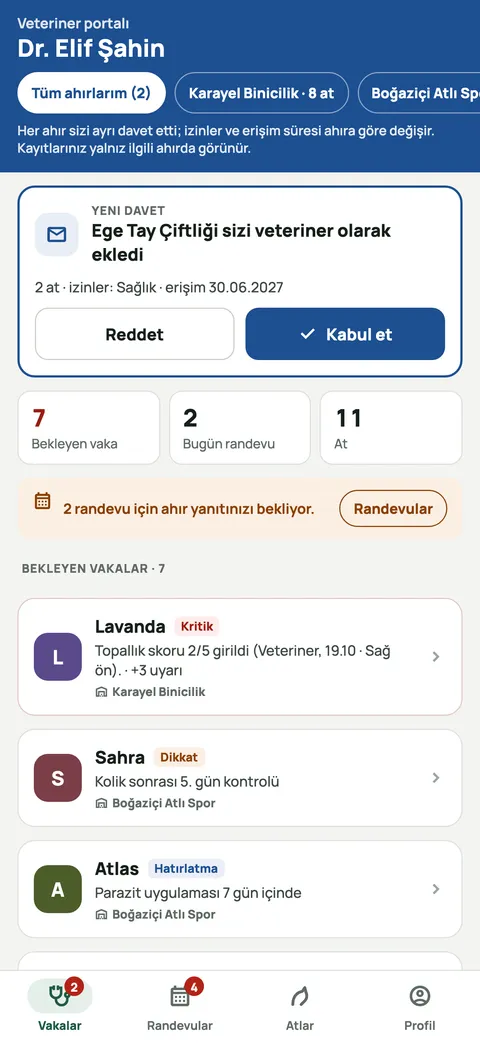
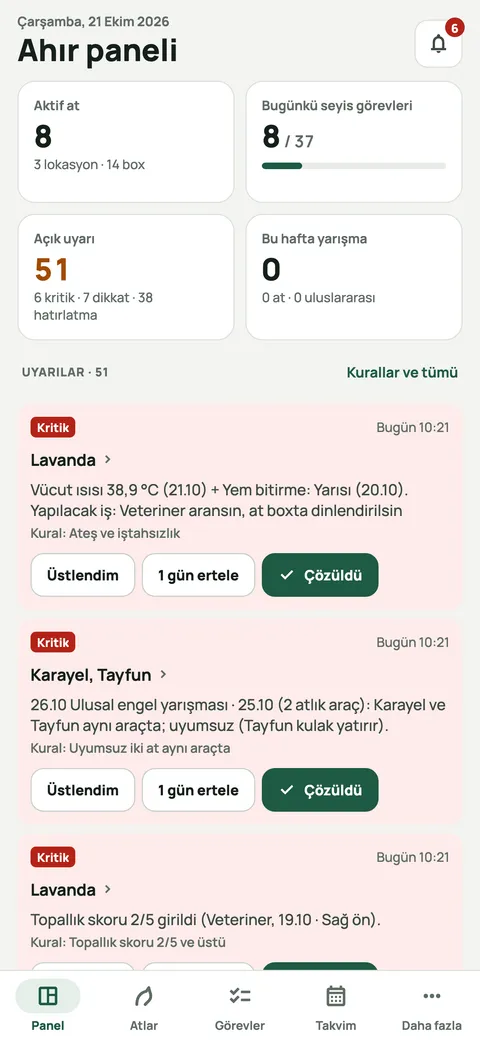
In Equ Crm, competition, transport, vet and farrier appointments sit in one weekly calendar, each with its status (planned, arrived, completed). Horse transfers between locations and stables are stored with their history. Alert rules catch risky situations in advance, such as incompatible horses booked on the same transport.
The competition results module records placing, penalties, time and prize money, builds a season summary and notifies the owner. Owners see their horse's results in the trophy cabinet in their portal. You can pull performance reports by period, and schedule them to go out by email if you like. We can talk through how it would fit your team in a demo call.
Summary
Behind a successful season there is usually a simple structure: chosen main targets for each horse, a calendar split into phases, paperwork checked early, a thought-through transport plan and records made the same day after every competition. Once that structure is in place, you finish the season not just with placings but with real knowledge to plan the next year better.